In short: most new neck pain improves a lot in the first six weeks, but for many people some of it is still there a year later (Hush et al., 2011). Worry and stress predicted pain that lasts or returns better than neck mobility or strength did (Yu et al., 2025). Exercise helps, and no single type comes out best (Rasmussen-Barr et al., 2023).
Your neck started aching, maybe after a long week at the laptop, an intense training session, or for no clear reason at all. Everyone tells you the same thing: give it a few weeks and it will settle. For a lot of people it does. For many others, it hangs around or keeps coming back.
How often does neck pain linger?
A review of seven studies followed people with new neck pain who had little or no treatment (Hush et al., 2011). On a scale from 0 to 100, pain dropped from 64 at the start to 35 after six and a half weeks. A year later it was still 42.
A change of about 1.3 on a 0 to 10 scale, so roughly 13 on this one, is what patients tend to notice as a real difference (Cleland et al., 2008). The big gain came in the first weeks. After that, on average, nothing meaningful changed for the rest of the year.
Why does it stick around for some people?
A 2025 review brought together six studies that followed 2,189 people over time (Yu et al., 2025). It looked at what predicted neck pain that lasted three months or more, or kept coming back.
Two things stood out. The first was psychological distress, such as feeling low, anxious or under pressure. The second was catastrophising, which means expecting the pain to get worse and worrying about what it might mean. In the largest of the six studies, with 1,708 people, those with the highest distress scores at the start were twice as likely to report neck pain a year later (Yu et al., 2025).
In the few studies that measured them, how far the neck could move and how strong the neck extensor muscles were did not predict how things went (Yu et al., 2025).
The pain is real. You're not imagining it and it's not 'in your head'. What these studies add is that stress and worry go together with pain that lasts, next to what happens in the neck itself.
One limitation: the review rests on six studies, three of them at high risk of bias, and the certainty is low to moderate. They show what predicts lingering pain. They cannot show what causes it.
Do I need a scan?
Usually not to start with. In a study of 1,211 adults without neck symptoms, 87.6% had bulging discs on MRI, including about three in four people in their twenties (Nakashima et al., 2015). Findings like these are common, signs of normal aging and often cause no pain at all, so on their own they can say little about yours.
What helps?
Exercise helps neck pain that has lasted for months, at least in the short term. An overview of 25 reviews found benefit from motor control exercise, Pilates, strength training, yoga and Tai Chi or Qigong, with no single type coming out best (Rasmussen-Barr et al., 2023). Exercise combined with hands-on treatment reduced pain for up to three to six months, while anti-inflammatory medication on its own did not (Castellini et al., 2022).
My view as a physiotherapist
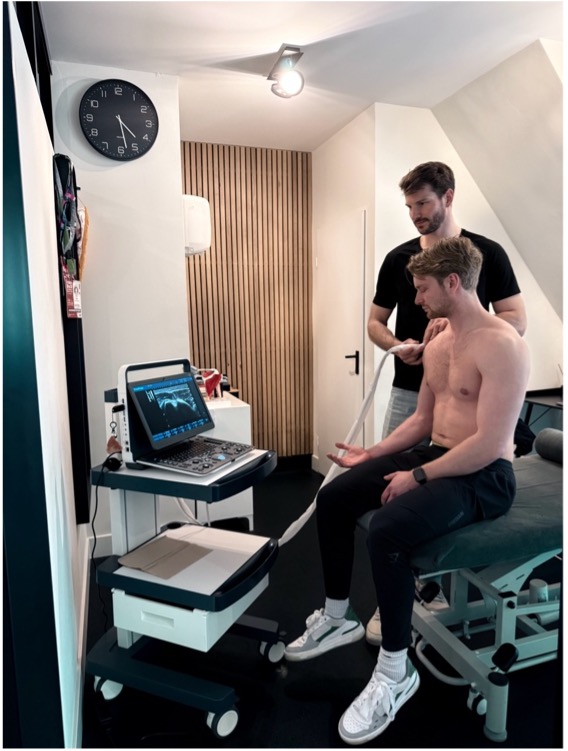
When neck pain sticks around past the first six weeks or so, I look wider than the neck. I ask about sleep, work, stress and what you fear the pain means, as well as how you move and use your neck, shoulder and back. Then we look for exercises you can keep doing and build it up step by step. How fast it settles differs from person to person. What we can do is look at the whole picture with you.
When should you get it checked?
- Your neck pain is still there after about six weeks, or keeps coming back
- Serious causes of neck pain are rare. Checking for them is part of what a physiotherapist asks about before treating the neck (Rushton et al., 2023)
- Pain for three months or more, or treatment hasn't helped? That's what our second opinion is for
Reviewed by Thomas Mulder, physiotherapist MSc and manual therapist MSc at EBP Studio.
References
- Castellini G, Pillastrini P, Vanti C, et al. Some conservative interventions are more effective than others for people with chronic non-specific neck pain: a systematic review and network meta-analysis. J Physiother. 2022;68(4):244-254. doi.org/10.1016/j.jphys.2022.09.007
- Cleland JA, Childs JD, Whitman JM. Psychometric properties of the Neck Disability Index and Numeric Pain Rating Scale in patients with mechanical neck pain. Arch Phys Med Rehabil. 2008;89(1):69-74. doi.org/10.1016/j.apmr.2007.08.126
- Hush JM, Lin CC, Michaleff ZA, Verhagen A, Refshauge KM. Prognosis of acute idiopathic neck pain is poor: a systematic review and meta-analysis. Arch Phys Med Rehabil. 2011;92(5):824-829. doi.org/10.1016/j.apmr.2010.12.025
- Nakashima H, Yukawa Y, Suda K, et al. Abnormal findings on magnetic resonance images of the cervical spines in 1211 asymptomatic subjects. Spine. 2015;40(6):392-398. doi.org/10.1097/BRS.0000000000000775
- Rasmussen-Barr E, Halvorsen M, Bohman T, et al. Summarizing the effects of different exercise types in chronic neck pain: a systematic review and meta-analysis of systematic reviews. BMC Musculoskelet Disord. 2023;24(1):806. doi.org/10.1186/s12891-023-06930-9
- Rushton A, Carlesso LC, Flynn T, et al. International framework for examination of the cervical region for potential of vascular pathologies of the neck prior to musculoskeletal intervention: International IFOMPT Cervical Framework. J Orthop Sports Phys Ther. 2023;53(1):7-22. doi.org/10.2519/jospt.2022.11147
- Yu CWG, Wongwitwichote K, Mansfield M, et al. Physical and psychological predictors for persistent and recurrent non-specific neck pain: a systematic review. Eur J Pain. 2025;29(10):e70168. doi.org/10.1002/ejp.70168