When a tendon causes pain, it usually means it has been asked to do more than it can currently handle. It is rarely damage that needs rest. Tendons respond well to the right kind of loading, even after months of pain. Getting that loading right is the hard part, and it is where a lot of treatment falls short.
What is tendinopathy, in plain terms?
A tendon is the strong band that connects muscle to bone. Tendinopathy means a tendon has become painful and less able to handle load.
It is usually not an inflammation problem, which is why rest and anti-inflammatory treatments so often disappoint. It is a capacity problem. The load on the tendon went past what it could take, and it has not built back up. That changes how you treat it: the aim is not to protect the tendon, but to rebuild what it can handle, step by step.
Why tendon pain so often drags on
A few common reasons the same complaint lingers for months:
- Too much rest. Rest calms the pain for a while, but it also lets the tendon get weaker, so the pain comes back as soon as you load it again.
- The wrong amount of load. Too much too soon flares it up. Too little never builds anything. The right amount is specific to you.
- A generic exercise sheet. A list of exercises is not a loading programme. How hard, how often, and how you progress are what drive recovery, and they are usually what gets skipped.
- Treating the sore spot, not the reason. If nobody asks why the tendon got overloaded in the first place (training load, technique, the rest of the chain, footwear, recovery), it tends to come back.
What actually helps
The research points one way: tendons get better when you load them in a planned, gradually increasing way. Rest or passive treatment on its own does not do it. This holds for the Achilles, knee, elbow, shoulder and hip.
Two things are important if you have been struggling with this for a while.
It can work even when earlier treatment did not. In a Dutch study of patients with knee-tendon pain, most had already tried treatment without fully recovering, and they still improved on a properly built loading programme. Usually the tendon can recover; the loading just was not right the first time.
When the pain just started and/or had a clear trigger, it often recovers faster by modifying activities. If you're dealing with persisting or recurring tendon pain it can take a few months. This is normal. Biologically tendons adapt slowly, so a realistic timeline is part of the process.
Which tendon is it?
Tendon pain turns up in a few common places. Find the one that fits you:
- Achilles tendon: pain at the heel or lower calf.
- Patellar tendon (jumper's knee): pain at the front of the knee, just below the kneecap.
- Tennis and golfer's elbow: pain on the outside or inside of the elbow.
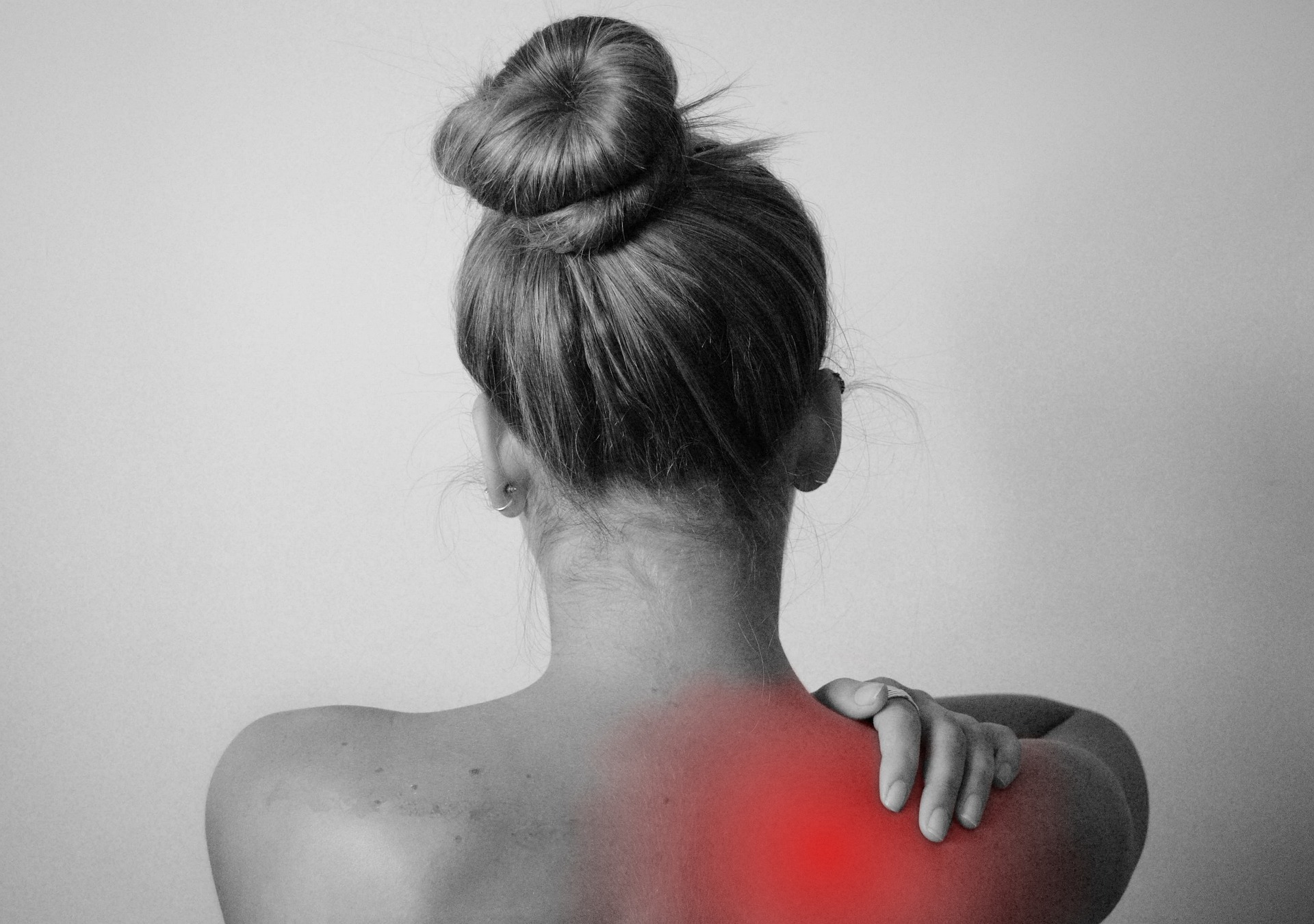
- Rotator cuff / shoulder: pain when reaching or lifting overhead.
- Gluteal tendon / hip: pain on the outside of the hip.
How we work with tendon pain at EBP Studio
- We look for the reason the tendon got overloaded, not just the painful spot.
- We work from the evidence, with MSc-trained therapists on the team.
- You get a loading programme built around your situation and progressed properly, not a printed sheet.
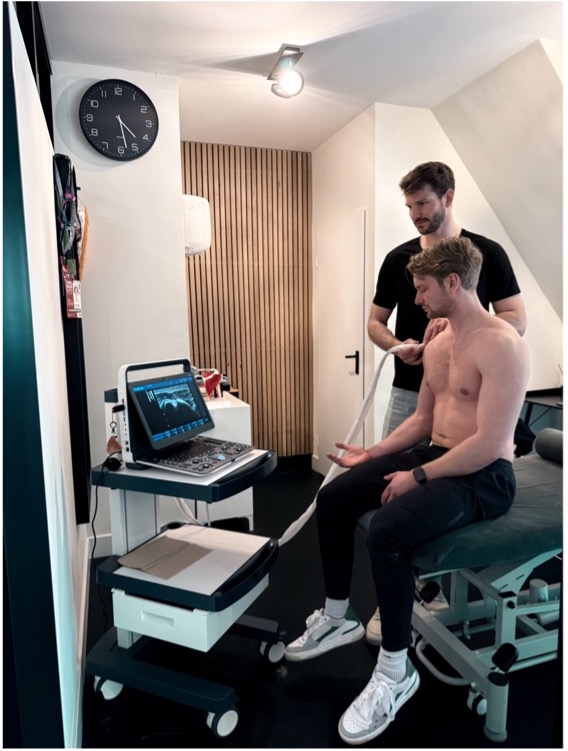
- We can do an ultrasound in-house when it helps to look at the tendon itself.
Common questions
Should I rest a painful tendon?
Mostly not. Full rest tends to make tendons weaker, so the pain returns when you start using them again. The goal is the right load at the right time, not no load. Calming a very irritated tendon for a short time can help, but rest on its own rarely fixes it.
Is it bad to exercise when a tendon hurts?
Not necessarily. Some pain during loading is usually fine, as long as it settles quickly and does not get worse over the next day. A physiotherapist can set limits that are safe for you.
How long does tendon pain take to get better?
When the pain just started and/or had a clear trigger, it often recovers faster by modifying activities. If you're dealing with persisting or recurring tendon pain it can take a few months. This is normal. Biologically tendons adapt slowly, so a realistic timeline is part of the process.
Do I need a scan or ultrasound in case of tendon pain?
Not always. Imaging can confirm the diagnosis or rule other things out, and we can do ultrasound here, but tendon changes on a scan do not always match the pain. It is one tool, not the whole answer.
I have already done physio and it did not help. Is it hopeless?
No. Often the problem is how the tendon was loaded, not that it cannot recover. Plenty of people who did not get better the first time do improve with a properly built programme. That is what a second opinion is for.
Where should you start?
Not sure what you need? Start here.
First time dealing with tendon pain, or it started recently? Book a first appointment with one of our therapists:
Annelou de Rooij · Olivier Nijman · Thomas Mulder · Julian Jaring
Pain for three months or more, or you have already seen one or more physiotherapists without lasting results? This is what our second opinion is for. We look for the cause others may have missed.
Book a second opinion with Julian Jaring or Thomas Mulder. Julian can also include an ultrasound of the tendon, a safe and painless look at the tendon itself, since he is the only one of us who does ultrasound.
Reviewed & evidence
Reviewed by Thomas Mulder, MSc-registered physiotherapist at EBP Studio.
This page reflects current evidence on tendinopathy management. Key sources:
- Cook JL, Purdam CR. Is tendon pathology a continuum? A pathology model to explain the clinical presentation of load-induced tendinopathy. Br J Sports Med. 2009;43(6):409-416. doi.org/10.1136/bjsm.2008.051193
- Cook JL, Rio E, Purdam CR, Docking SI. Revisiting the continuum model of tendon pathology: what is its merit in clinical practice and research? Br J Sports Med. 2016;50(19):1187-1191. doi.org/10.1136/bjsports-2015-095422
- Breda SJ, et al. Effectiveness of progressive tendon-loading exercise therapy in patients with patellar tendinopathy: a randomised clinical trial. Br J Sports Med. 2021;55(9):501-509. doi.org/10.1136/bjsports-2020-103403
- Pavlova AV, et al. Effect of resistance exercise dose components for tendinopathy management: a systematic review with meta-analysis. Br J Sports Med. 2023;57(20):1327-1334. doi.org/10.1136/bjsports-2022-105754
- Silbernagel KG, Hanlon S, Sprague A. Current Clinical Concepts: Conservative Management of Achilles Tendinopathy. J Athl Train. 2020;55(5):438-447. doi.org/10.4085/1062-6050-356-19


.jpg)
.jpg)