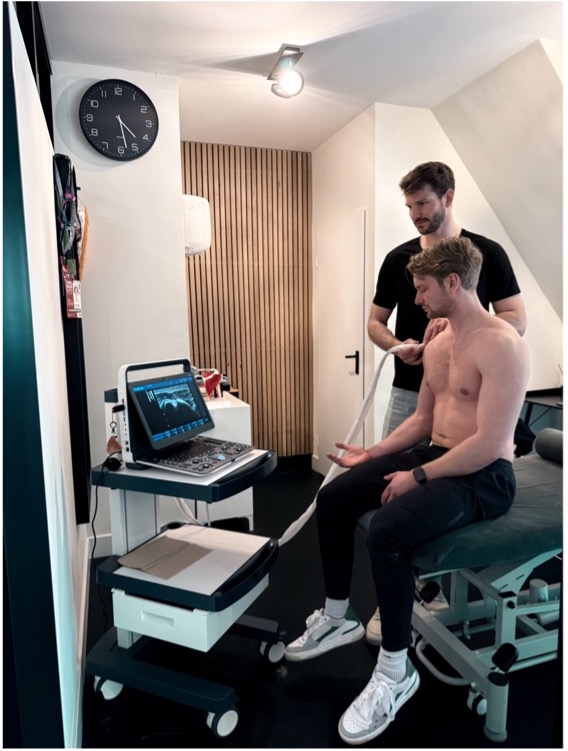
Your elbow hurts when you grip, lift, or even shake someone's hand, and it has not settled with rest. Most people who get this never played tennis, which makes the name a little misleading. It is a frustrating spot to be in, especially when something as small as lifting a full kettle sets it off.
In most cases the tendon at your elbow has lost some of its capacity to handle load, mostly gripping and wrist load. That can be rebuilt with the right approach.
Tennis elbow, golfer's elbow: what is the difference?
Both are everyday names for a load problem in the tendons around the elbow, a so-called tendinopathy. The difference is the side.
Tennis elbow (lateral epicondylalgia) sits on the outside of the elbow, where the muscles that pull your wrist and fingers back attach. Golfer's elbow (medial epicondylalgia) sits on the inside, where the muscles that bend your wrist and grip attach. Despite the sporty names, this shows up just as often from work, DIY, a lot of laptop use, or a new repetitive task. And despite how it feels, it is usually not an inflammation you can wait out.
Why does resting it often not fix it?
A tendon keeps its strength and capacity through load. Take that load away completely and it drops further. Go back to your normal gripping and lifting and the tendon is less prepared than before, so the pain flares again.
Rest feels like the sensible move. For this tendon it usually backfires.
This does not mean gripping through sharp pain. The heaviest, most provoking grips and lifts can come down for a while. Keeping the arm completely still is rarely the answer.
What about a brace, or a steroid injection?
A brace or strap can take the edge off while you build the tendon back up. It is a helper, not a fix.
The injection question comes up a lot, so it is worth being straight about. A corticosteroid injection can calm the pain in the short term. But across good-quality trials, that early relief reverses over the following months, with more recurrence and slower recovery than doing very little or loading the tendon. It is a strong anti-inflammatory for a problem that is not really an inflammation, which is part of why it tends to disappoint over time. It can buy short-term calm. The loading is what rebuilds the tendon.
None of this means overruling your doctor. It means going in knowing what an injection does and does not do.
What helps: rebuilding the tendon step by step
The core of recovery is progressive, dosed loading, aimed at the grip and wrist tendons. You load the tendon heavily enough to challenge it and controlled enough not to overload it, and you build from there.
No single exercise is magic. What matters is that the load fits the current state of your tendon and grows step by step, and that the rest of the arm gets a look too: the grip, the forearm, the shoulder, and how you use the arm across a whole day.
People almost always ask whether it is allowed to hurt, and whether loading will make it worse. Some pain during the exercises is fine, as long as it stays acceptable and settles within a day. Pain here does not mean you are causing damage. It is feedback on how much the tendon can handle right now.
But what if the scan showed something?
Many people arrive with an ultrasound or MRI showing changes in the tendon, and it worries them. That image says less than you would think.
A scan shows the structure of the tendon. It does not show your pain. People with no symptoms at all often show the same changes and use their arm pain-free. And the tendon does not need to look better on the scan for you to feel better. Changes on a scan do not mean your elbow is beyond repair.
How long does tennis or golfer's elbow take to settle?
How long recovery takes depends a lot on how long the pain has already been around. When the tendon has been bothering you for a while, this usually runs in months rather than days, and three to six months of steady rebuilding is common. It does not have to take that long, though. If the pain started recently, or came on after a clear spike in load like a weekend of DIY, a new task at work, or a lot of new gripping, it can settle a good deal faster once you adjust that load and build it back the right way, sometimes within a few weeks. Either way, progress is usually gradual, and a clear plan and good guidance make the difference between sticking with it and giving up.
How do we approach elbow pain at EBP Studio?
Many people who come to us have already rested, braced or tried an injection elsewhere without it fitting their situation. We start with the question underneath the complaint: where exactly is the capacity falling short, and how do we rebuild it while keeping you using the arm as much as we safely can? We build the plan around your elbow, your grip and the things you actually need your arm for.
Still dealing with an elbow that flares every time you grip or lift? Book an appointment and we'll look at where it is stuck and what it takes to move forward.
Frequently asked questions
Do I have to stop using my arm with tennis or golfer's elbow?
Usually not. The tendon gets stronger through load and loses capacity when you take that load away entirely. You can bring the heaviest, most provoking grips and lifts down for a while, but progressive loading is part of the recovery.
Do steroid injections work for tennis elbow?
They can reduce the pain in the short term. The catch is that this early relief tends to reverse over the following months, with more recurrence than loading the tendon or even doing very little. It can calm things down, but it does not rebuild the tendon.
How long does tennis elbow take to heal?
It depends mostly on how long it has been there. Recent, clearly triggered pain can settle in a few weeks once you adjust the load. Long-standing pain more often takes a few months of steady rebuilding, and progress is usually gradual.
This article is part of our guide to tendon pain.


.jpg)
.jpg)